 by
by
Table of Contents
- Introduction
- Current Solar Panel Prices in Pakistan
- Factors Behind the Price Drop
- Impact on Businesses and Households
- Government Initiatives and Policies
- Comparison with Previous Years
- Types of Solar Panels and Their Prices
- Future Trends in Solar Energy in Pakistan
- Conclusion
1. Introduction
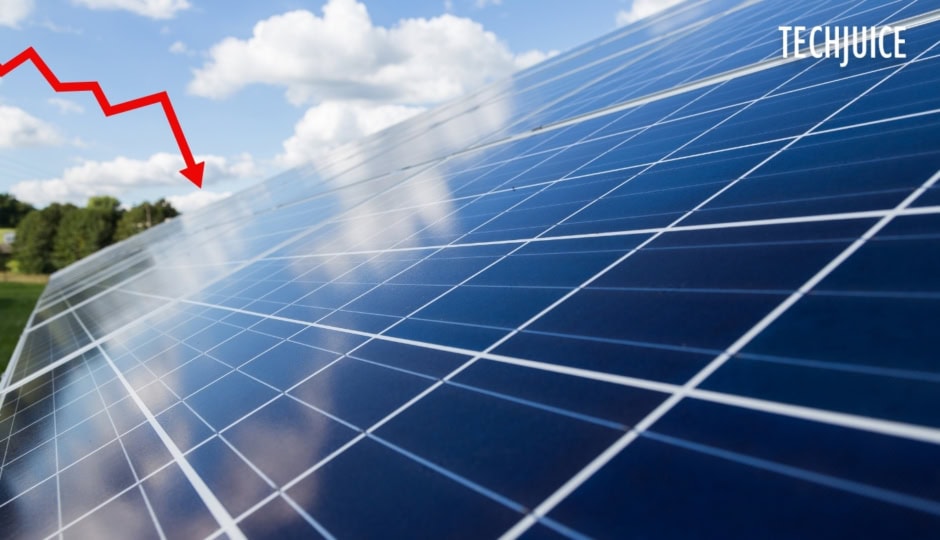
The solar energy market in Pakistan has recently witnessed a significant shift as solar panel prices drop sharply. This change has opened new opportunities for households, businesses, and investors looking to adopt sustainable and cost-effective energy solutions. Solar energy, once considered expensive, is now becoming increasingly accessible.
2. Current Solar Panel Prices in Pakistan
As of 2025, the average price for solar panels in Pakistan has decreased significantly compared to previous years. Prices for residential solar panels now range between PKR 20,000 to PKR 35,000 per 100-watt panel, while commercial-grade panels can cost between PKR 50,000 to PKR 70,000 per 300-watt panel.
| Type | Capacity | Price Range (PKR) |
|---|---|---|
| Residential | 100W | 20,000 – 35,000 |
| Residential | 250W | 50,000 – 65,000 |
| Commercial | 300W | 50,000 – 70,000 |
| Commercial | 400W | 70,000 – 90,000 |
The price drop makes solar systems more affordable for a larger portion of the population.
ALSO READ
Faysal Bank PayPak-Mastercard Co-Badge Debit Card Guide
3. Factors Behind the Price Drop
Several factors have contributed to the reduction in solar panel prices in Pakistan:
- Increased Production: Expansion of local manufacturing has reduced reliance on imports and lowered costs.
- Global Market Trends: Worldwide, solar panel prices have decreased due to improved technology and mass production.
- Government Policies: Subsidies, tax reductions, and incentives for solar panel installations have made adoption more affordable.
- Competition: Rising competition among local and international suppliers has pushed prices down further.
4. Impact on Businesses and Households
The price drop has a significant impact on both businesses and households:
- Households: Homeowners can install solar panels to meet daily electricity needs, reducing dependence on grid electricity and lowering energy bills.
- Businesses: Companies can invest in solar systems to power operations, leading to long-term cost savings and reduced carbon footprints.
- Startups and Entrepreneurs: Lower prices encourage more businesses to explore solar-related services such as installation, maintenance, and energy consulting.
5. Government Initiatives and Policies
The Pakistani government has introduced several initiatives to support solar energy adoption:
- Net Metering Policy: Allows households and businesses to sell excess electricity back to the grid, providing an additional revenue stream.
- Subsidies and Incentives: Financial support for solar panel installation, particularly for residential projects.
- Awareness Campaigns: Educating the public on the benefits of renewable energy to encourage adoption.
6. Comparison with Previous Years
Over the last five years, solar panel prices in Pakistan have dropped by almost 40%:
| Year | Average Residential 100W Panel Price (PKR) |
|---|---|
| 2020 | 33,000 – 45,000 |
| 2021 | 30,000 – 42,000 |
| 2022 | 28,000 – 40,000 |
| 2023 | 25,000 – 38,000 |
| 2025 | 20,000 – 35,000 |
This consistent decline reflects both technological advancements and government support.
7. Types of Solar Panels and Their Prices
The Pakistani government provides detailed guidelines on solar energy policies and net-metering, which can be accessed through the official Power Division website here.
Different types of solar panels are available in Pakistan, each with varying efficiency and prices:
- Monocrystalline Panels: Higher efficiency, more expensive, ideal for limited space.
- Polycrystalline Panels: Slightly less efficient, more affordable, suitable for larger rooftops.
- Thin-Film Panels: Lightweight and flexible, lower efficiency, mainly used for special applications.
| Panel Type | Efficiency | Price Range (PKR) |
|---|---|---|
| Monocrystalline | 20-22% | 25,000 – 40,000 (100W) |
| Polycrystalline | 15-18% | 20,000 – 35,000 (100W) |
| Thin-Film | 10-12% | 18,000 – 30,000 (100W) |
8. Future Trends in Solar Energy in Pakistan
The solar energy sector in Pakistan is expected to grow rapidly due to declining costs, government support, and increased awareness:
- Integration with Smart Technology: Solar panels combined with battery storage and smart monitoring systems.
- Rural Electrification: Solar energy reaching remote areas where the national grid is unreliable.
- Corporate Adoption: Large-scale commercial solar projects will continue to expand.
- Innovation: Continued research in higher-efficiency solar panels and storage solutions.
9. Conclusion
The sharp drop in solar panel prices in Pakistan is transforming the energy landscape. Affordable solar solutions are becoming accessible to more households and businesses, reducing reliance on traditional electricity and contributing to environmental sustainability. With continued government support, technological advancement, and rising public awareness, the future of solar energy in Pakistan looks promising.