 by
by Table of Contents
- Introduction
- The Incident in Detail
- Allegations and Legal Proceedings
- Possible Causes Behind the Clash
- Reactions from Medical Community and Public
- Consequences for Healthcare and Administration
- Way Forward and Recommendations
- Conclusion
1. Introduction
A shocking incident unfolded recently at a major government hospital in Lahore when a group of young doctors allegedly assaulted the Additional Medical Superintendent (AMS). The confrontation reportedly took place late at night inside the hospital premises, raising serious concerns about discipline, professional ethics, and safety within public health institutions.
The event has not only sparked outrage within the medical community but also triggered discussions about the pressures and working conditions faced by healthcare workers.
2. The Incident in Detail
According to reports from the hospital administration, the assault occurred in the VIP block around midnight. The AMS, identified as Dr. Shakeel Sarwar, was allegedly attacked by more than 20 young doctors.
The confrontation reportedly began as a heated argument over administrative decisions. It escalated when the AMS refused to comply with certain demands made by the young doctors. What began as a verbal exchange soon turned violent, resulting in the AMS sustaining injuries.
ALSO READ
UAE Residents Above 50 Urged to Get Shingles Vaccine
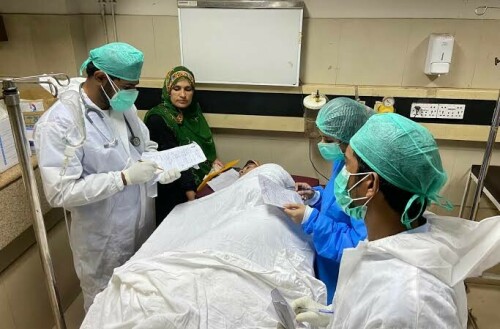
Following the attack, a medical examination confirmed evidence of physical assault. Security personnel and other hospital staff intervened to prevent the situation from worsening.
An official complaint was filed with local authorities, and a First Information Report (FIR) was registered at the nearest police station against several doctors involved.
3. Allegations and Legal Proceedings
The AMS alleged that the young doctors had attacked him “with the intent to cause serious harm,” linking the incident to internal administrative disagreements.
Police launched an investigation soon after, recording statements from witnesses and reviewing CCTV footage. Meanwhile, the hospital’s administration formed an internal inquiry committee to investigate the matter and recommend disciplinary action.
The accused doctors have denied the allegations, claiming that the incident has been exaggerated and that they were provoked by the AMS’s “unprofessional conduct.” The truth, therefore, will depend on the findings of both the police and internal inquiries.
4. Possible Causes Behind the Clash
This unfortunate event reflects a deeper issue within the public healthcare system. Tensions between hospital administrators and young doctors have been rising for years due to multiple reasons:
- Heavy workload and stress: Young doctors often work long shifts under immense pressure with limited resources and staff.
- Lack of administrative support: Many doctors feel that hospital management is unresponsive to their concerns, creating frustration.
- Weak communication channels: When grievances are ignored, disagreements can spiral into conflict.
- Poor security arrangements: The incident also reveals lapses in hospital security, as such a violent episode occurred within a controlled area.
- Cultural and systemic issues: A broader culture of impunity and lack of accountability within some public institutions allows misconduct to go unchecked.
5. Reactions from Medical Community and Public
The medical community reacted strongly. The Young Doctors Association condemned the incident but called for a fair and transparent investigation rather than a one-sided action.
In several hospitals, outdoor patient departments (OPDs) were temporarily suspended as part of protest actions, putting additional strain on healthcare delivery.
According to the Specialized Healthcare & Medical Education Department, Punjab, strict measures are being taken to improve hospital management and ensure staff safety.For more information, visit their official website.
Public opinion has been divided. Some sympathized with the doctors, acknowledging the immense pressure they face daily. Others condemned the act of violence, emphasizing that professional disagreements should never turn physical, especially within a healthcare environment meant for healing and care.
6. Consequences for Healthcare and Administration
The assault has had immediate and long-term repercussions.
First, patient care has suffered due to protests and administrative disruptions. Hundreds of patients who depend on government hospitals were left unattended during OPD closures.
Second, staff morale has declined. The incident has created an atmosphere of fear and mistrust among doctors and administrators. Many medical officers are now concerned about their own safety.
Third, the hospital’s reputation has taken a hit, undermining public confidence in the healthcare system.
Finally, the issue has highlighted governance challenges within government hospitals — where poor management, lack of oversight, and inadequate grievance mechanisms often allow conflicts to escalate.
7. Way Forward and Recommendations
To prevent similar incidents in the future, several urgent measures are necessary:
- Fair Investigation: Authorities must ensure a transparent, impartial inquiry and hold accountable all those responsible, regardless of position or influence.
- Stronger Security Measures: Install functioning CCTV cameras, increase night-shift security, and restrict access to sensitive administrative areas.
- Clear Administrative Hierarchy: Define roles and responsibilities to minimize power struggles and ensure decisions are made through proper channels.
- Conflict Management Training: Introduce regular workshops to teach communication, negotiation, and stress-management skills.
- Support Systems for Doctors: Establish counseling and peer-support programs to help young doctors cope with professional burnout.
- Legal Protection: Strengthen laws protecting healthcare workers and ensure strict punishment for anyone engaging in violence on hospital premises.
- Public Awareness: Promote respect for medical staff and encourage dialogue between patients, doctors, and administrators.
8. Conclusion
The assault on the Additional Medical Superintendent by a group of young doctors is a disturbing reminder of the growing tensions and systemic weaknesses in Pakistan’s public healthcare system. It highlights not just an isolated conflict, but a breakdown of communication, respect, and governance within institutions meant to serve and protect lives.
If hospitals — the very centers of healing — become battlegrounds of power and frustration, the cost will ultimately be paid by the public. Restoring order, professionalism, and mutual respect is now not just a matter of policy but a moral obligation.