 by
by Dubai is piloting a cutting‑edge AI‑powered Virtual ICU system that merges real‑time data analytics and visual monitoring to support critical care. In its early trial at Al Jalila Children’s Hospital, the system continuously observes ICU patients, detects subtle signs of deterioration, and alerts medical teams to intervene earlier. This development underscores Dubai’s ambition to lead in intelligent healthcare, promising more responsive, efficient, and data‑driven critical care.
Table of Contents
- What Is a Virtual ICU?
- Dubai’s Pilot at Al Jalila Children’s Hospital
- How the AI System Operates
- Integration With Health Infrastructure
- Benefits & Anticipated Impact
- Challenges & Risks
- Future Plans & Expansion
- Global Context & Trends
- Conclusion
1. What Is a Virtual ICU?
A Virtual ICU (vICU) is a technologically enhanced monitoring system that supplements traditional ICU care by using sensors, cameras, and AI analytics. It watches patients continuously—not just via periodic checks—monitoring motion, facial expressions, posture, and vital signs. When subtle shifts in condition are detected, the system generates alerts to the clinical staff.
This setup acts as an auxiliary pair of eyes. The goal is to catch early warning signs—before they escalate into full-blown emergencies—that may otherwise go unnoticed during routine rounds.
ALSO READ Pass Percentage Analysis BISE Multan 11th Class Result with Impressive Insights
2.Dubai’s initial deployment
Dubai’s initial deployment covers ten ICU beds at Al Jalila Children’s Hospital. The pilot phase is meant to validate the system’s accuracy, safety, and clinical usability.
As part of the project, a remote command center (in Washington, D.C.) is also monitoring those beds, providing parallel oversight. This dual setup enables benchmarking, cross-validation, and comparative feedback to improve system performance.
The authorities plan to evaluate the pilot over several months and, based on results, scale it across hospitals in Dubai’s health network.
3. How the AI System Operates
Visual & Motion Monitoring
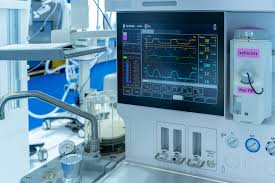
Each ICU room is equipped with AI‑enabled cameras that observe patients’ facial cues, body movements, posture changes, and even subtle signs like sliding in bed or abrupt motion. If an anomaly is detected, the system flags it.
Vital‑Sign & Clinical Data Integration
The AI system continuously ingests vitals (e.g. heart rate, oxygen saturation, respiratory rate) and lab/clinical data. By correlating visual cues with shifts in physiological parameters, the system can validate whether an alert is meaningful or a false positive.
Alerting & Workflow
When a threshold is crossed or a concerning pattern emerges, the system sends an alert to the nursing station specifying the bed or room, the nature of the anomaly, and suggested urgency. Staff can then evaluate and act accordingly.
To avoid alert fatigue, multiple criteria (e.g. motion + vital change) are often required before issuing warnings.
Remote Oversight & Feedback
The Washington command center acts as a second monitor, providing oversight, verifying alerts, and offering feedback to refine the AI models. This helps improve system accuracy over time.
4. Integration With Health Infrastructure
A central success factor is integration with Dubai Health’s digital systems. The virtual ICU is tied into the unified electronic medical record (EMR) system, enabling real‑time data flow: vitals stream in, alerts generate flags in the EMR, and historical trends are stored for analysis.
This connected architecture ensures that the system is not standalone but woven into the clinical ecosystem. Data from sensors, cameras, and patient histories are synchronized to make the AI more robust and actionable.
5. Benefits & Anticipated Impact
If effective, Dubai’s virtual ICU could deliver multiple gains:
- Earlier detection & intervention: By detecting subtle signs sooner, medical teams can intervene before deterioration becomes severe.
- Lower ICU morbidity and mortality: With prompt response, complications may be avoided, improving outcomes.
- Reduced length of stay: More stable patients recover faster, freeing ICU beds.
- Optimized staff workload: Nurses and intensivists receive targeted alerts instead of constantly scanning all patients.
- Standardization and quality assurance: Automated monitoring helps enforce care standards consistently.
- Scalability & remote support: Remote oversight allows expertise to be shared across hospitals, especially in resource-limited settings.
6. Challenges & Risks
Several obstacles must be addressed:
- False positives & alarm fatigue: Excessive alerts can erode trust and lead to disregarding warnings.
- Data privacy & ethics: Continuous visual monitoring raises concerns around informed consent, access, and data security.
- Integration complexity: Mismatched data standards, latency issues, and interface bugs can hinder smooth operation.
- Clinician acceptance: Physicians and nurses must trust and understand the system, not see it as a “black box.”
- Liability & regulation: Who is responsible if an AI alert is missed or incorrect? Regulatory frameworks must evolve.
- Cost & maintenance: Deploying cameras, AI servers, and upkeep is expensive and must be sustainable.
- Clinical validation: The system must prove its utility through rigorous trials before broader rollout.
7. Future Plans & Expansion
Dubai’s roadmap includes:
- Pilot evaluation: Measure alert accuracy, intervention timing, and impact on patient outcomes.
- Algorithm refinement: Tweak thresholds, reduce false alarms, improve sensitivity.
- Rollout to more ICUs: Expand to adult ICUs in Dubai after pilot validation.
- GCC / inter‑emirate integration: Connect ICU data across emirates, possibly across borders.
- Enhanced AI tools: Incorporate decision support (e.g. dosing suggestions), predictive modeling, and resource forecasting.
- Smart hospital vision: The virtual ICU may become part of a larger smart hospital ecosystem: robots, ambient monitoring, AI command centers, and remote collaboration.
8. Global Context & Trends
Dubai’s virtual ICU effort aligns with a broader global shift toward AI-augmented critical care:
- In the U.S., vICU models (remote intensivist oversight + central monitoring) are already in operation in some health systems.
- Academic research is exploring pervasive sensing—combining cameras, motion sensors, and environment data—to detect pain, delirium, mobility, and acuity states.
- Many hospitals deploy predictive models (for sepsis, mechanical ventilation weaning, risk scoring) based on machine learning.
- However, fully camera‑based vICUs integrated with clinical workflows remain rare, making Dubai’s pilot especially ambitious.
Dubai’s advantages include centralized health authorities, a unified EMR infrastructure, and leadership support for AI initiatives. These provide conditions to scale more rapidly than in fragmented systems.
9. Conclusion
Dubai’s AI‑powered Virtual ICU pilot represents a bold stride in merging artificial intelligence with frontline critical care. Starting with ten ICU beds at Al Jalila Children’s Hospital, the system leverages visual analytics, motion detection, and real-time vital sign integration to provide continuous surveillance and early alerts.
The promise is compelling: faster intervention, improved outcomes, shorter ICU stays, and more efficient staff operations. But success hinges on addressing false alarms, safeguarding privacy, integrating smoothly into workflows, and gaining clinician trust.
If the pilot demonstrates real clinical benefit, Dubai may scale the system to more hospitals and even integrate across emirates or the Gulf region. More broadly, this initiative highlights a future where human clinicians are amplified by AI systems, increasing vigilance, precision, and responsiveness in the most critical settings of the hospital.