 by
by Table of Contents
- Introduction
- Background: Exam Structure in Punjab
- 2026 Exam Start Dates Announcement
- What Students and Schools Should Do
- Likely Impacts on Students & Teachers
- Challenges & Key Considerations
- Conclusion
1. Introduction
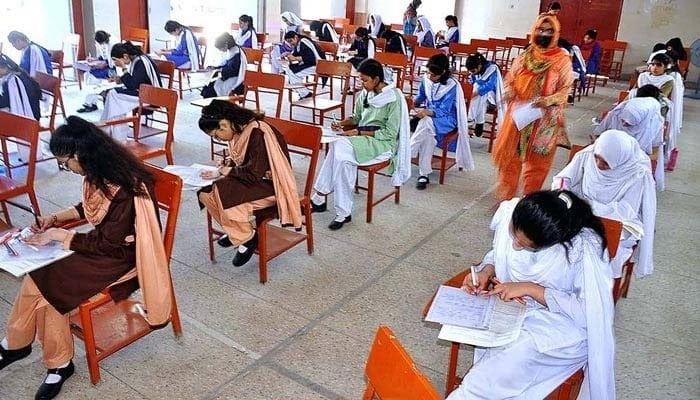
The Punjab educational authorities have recently issued a formal announcement regarding the annual board examinations for Classes 9 and 10 for the year 2026. This announcement is significant for students, schools, and parents across the province as it sets out the timeline for one of the major academic milestones.
With thousands of students preparing to sit for these exams, clarity on dates and schedule helps all stakeholders align their planning and preparation efforts accordingly.
2. Background: Exam Structure in Punjab
In Punjab, the annual examinations for class 9 (first year matric) and class 10 (terminal matric) are administered by the various Boards of Intermediate & Secondary Education under the coordination of the Punjab Boards Committee of Chairmen (PBCC).
The matriculation exams are typically held once a year, covering both written and practical papers. These exams play a vital role in determining students’ progression: results of class 9 often determine eligibility and stream placement for class 10, while class 10 results are crucial for further study streams such as sciences, commerce or arts.
Past schedules indicate that exams often begin in early to mid‑March and conclude by late April, with practicals following. For example, for the 2025 session class 10 exams started March 4.
ALSO READ
UAE Arab University Rankings Reveal Leading Institutions
3. 2026 Exam Start Dates Announcement
According to the most recent updates, the Punjab Boards’ committee has announced the starting dates for the annual exams for class 9 and class 10 for the year 2026. While detailed day‑by‑day schedule may still be issued, the major timeline is as follows:
- Class 10 annual exams are set to start in early March 2026, following the pattern of previous years.
- Class 9 exams will follow shortly after the class 10 written papers conclude, ensuring a staggered schedule.
- Practical examinations for both classes will be held after the completion of written papers, as is the usual procedure.
This announcement gives students and schools sufficient lead time to plan revision schedules, allocate practice sessions, and ensure readiness for the examination period.
4. What Students and Schools Should Do
For students:
- Make a detailed study schedule counting backwards from the start date. Prioritise subjects you find most challenging.
- Acquire the syllabus and past‑papers; many boards release model or previous years’ papers for practice.
- Ensure practical work (for science/technical subjects) is completed ahead of the practical exam period and that all experiments/assignments are properly logged and submitted.
- Maintain regular contact with teachers for clarification on syllabus changes or date sheet updates.
For schools and teachers:
- Finalise the internal calendar including revision periods, mock exams and practical preparations well before the exam start.
- Arrange the printing and distribution of admit cards, seating arrangements and exam centres in line with the PBCC schedule.
- Conduct awareness sessions for students about rules, timing, exam hall discipline, and document requirements.
- Monitor student attendance and readiness in the weeks leading up to the exams.
5. Likely Impacts on Students & Teachers
Punjab Boards Committee of Chairmen PBCC Official Notification on Class 9 and 10 Exam Schedule Link
The early announcement of dates brings several benefits:
- Reduced uncertainty: Knowing the start date early helps reduce anxiety among students and parents.
- Effective planning: Schools can align teaching pace and revision sessions to match the timeline.
- Focused preparation: Students can prioritise topics for revision, especially for classes with high weightage or historically difficult papers.
For teachers, the advance notice allows better scheduling of subject‑coverage and practicals, avoiding last‑minute rushes or syllabus compressions. It also allows for better coordination of examination logistics, such as exam centres, invigilators, and practical labs.
6. Challenges & Key Considerations
Despite the advantages, there are potential challenges:
- Syllabus changes or reductions: If the board revises syllabus or exam pattern close to the exam date, students and teachers may face disruptions. Past example: a reduced syllabus was announced for classes 9 & 10 in Punjab.
- Logistical issues: Schools must ensure all exam centre arrangements, seating, security and invigilation are ready; any delays may cause disruption.
- Practical exam logistics: Practical exams often require labs, special equipment, and extra time. Efficient handling is critical.
- Timing vs holidays: The exam period often overlaps with holidays such as Eid, which need to be factored into scheduling and student readiness. For example, previous sessions had holiday breaks during exams.
7. Conclusion
The announcement of the starting date for the class 9 and 10 annual exams in 2026 by the Punjab Boards Committee marks a crucial milestone in the academic calendar. With this information in hand, students, teachers and schools can plan ahead, structure their revision and preparation more efficiently, and approach the examination period with greater confidence.
While challenges remain—such as potential syllabus changes or logistical matters—the advance notification signifies a proactive step by the educational authorities to support smooth execution of the board examinations. All stakeholders are encouraged to use this window to strategise, prepare and ensure the best possible outcomes in the upcoming exam cycle.