
 by
by Table of Contents
- Introduction
- What the New Policy States
- Why Students Are Protesting
- Stakeholders and Their Concerns
- Effects of the New Policy
- Students’ Key Demands
- Government’s Response
- Conclusion
1. Introduction
A new admission policy for medical and dental colleges in Punjab has sparked a wave of frustration among students. Thousands of aspiring doctors across the province have come together to voice strong objections, calling the policy unfair and discriminatory.
For years, the medical entrance system was based on a single annual test — the MDCAT — ensuring that all candidates competed under the same rules. However, the recent policy has changed that balance, allowing students from past years to use their old scores to apply again for new seats. This single alteration has become the center of a massive debate.
2. What the New Policy States
The updated medical college admission policy introduces a significant shift in how admissions are determined. According to the new guidelines:
- Students who appeared in the MDCAT test during previous years can now use those results for the upcoming admission cycle.
- The policy allows the use of test scores from up to two previous years for new admissions.
- It applies to both government and private medical and dental colleges in Punjab.
Essentially, a student who took the MDCAT in 2023 or 2024 can use the same marks to apply for a seat in 2025. This means that fresh candidates who are taking the 2025 test will have to compete against older candidates with potentially higher or incomparable scores.
ALSO READ
Pakistani University Signs Powerful Research Partnership with Cambridge University
3. Why Students Are Protesting
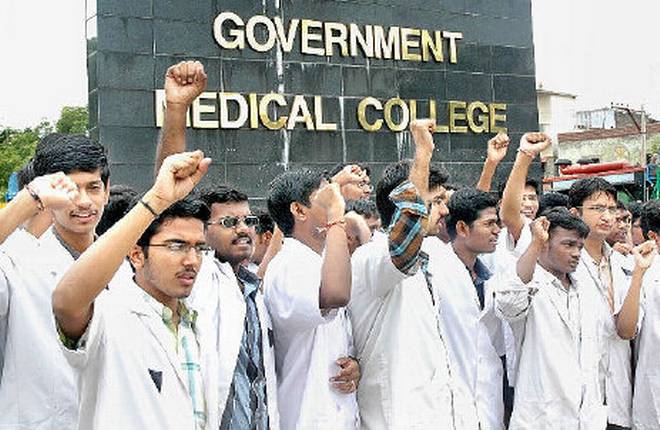
Students have expressed anger and disappointment over what they call a “two-tier competition”. Their main argument is that this new policy creates an uneven playing field.
Every year, the MDCAT exam changes — from question styles to difficulty level and even the number of questions. Allowing scores from different years means comparing students who didn’t face the same test conditions.
Fresh candidates believe this directly harms their chances of admission because:
- Older students may already know the process and test structure better.
- The difficulty level of past MDCAT exams might have been lower.
- Some past candidates scored exceptionally high marks under different marking schemes.
Students are also concerned that many older candidates who already hold seats might reapply simply to upgrade to better colleges. This would create administrative chaos and could delay the start of the new academic session.
4. Stakeholders and Their Concerns
The issue doesn’t only affect students. Multiple groups are now involved — each with their own concerns.
| Stakeholder | Concern |
|---|---|
| Fresh 2025 Candidates | Fear of losing seats to older test-takers and facing unequal competition. |
| Previous MDCAT Candidates | Opportunity to improve placement or secure a more preferred college. |
| Medical Colleges | Increased administrative burden, possible seat vacating, and confusion in merit lists. |
| Parents & Guardians | Lack of clarity and transparency in the selection process. |
| Education Experts | Potential violation of merit-based principles and long-term harm to academic credibility. |
This mix of voices has created a storm of criticism, urging the government to reconsider the decision.
5. Effects of the New Policy
The effects of this policy, if implemented without revision, could be widespread — both immediate and long-term.
Immediate Effects
- Disheartened Fresh Students: The 2025 MDCAT batch feels their efforts are undervalued.
- Overcrowded Admissions: A surge in applicants will make the competition even tighter.
- Administrative Delays: Handling seat upgrades and reapplications could delay the entire admission schedule.
Long-Term Effects
- Erosion of Trust: Students may lose faith in the fairness of the system.
- Reduced Motivation: New test-takers might question the point of preparing rigorously if older scores keep dominating.
- Reputation Damage: Punjab’s medical admission process, long known for its merit-based structure, could lose credibility in the eyes of the public.
6. Students’ Key Demands
Students have been clear and united in their demands. Their protests, campaigns, and social media movements highlight three main points:
- Withdraw the Policy: They want the government to cancel the multi-year eligibility rule immediately.
- Ensure Equal Competition: Admissions should be based only on the current year’s MDCAT results.
- Promote Transparency: Authorities should share the reasoning, data, and comparisons that led to this decision.
In addition, students have suggested that any future changes in admission criteria should be announced at least a year in advance, so no batch feels targeted or unfairly treated.
ALSO READ
Punjab Teachers 2025 Important Update Affects 11000 Dedicated Educators
7. Government’s Response
So far, the government has acknowledged the growing unrest but has not officially withdrawn the policy. Officials have argued that the decision was made to provide flexibility for students who missed admissions due to unforeseen reasons or seat shortages in previous years.
However, critics say this explanation ignores the fundamental issue of fairness. Student organizations and medical associations have openly stated that the policy undermines merit and must be revised immediately.
The debate is ongoing, and while no final decision has been announced yet, pressure from both students and educators continues to build. Some reports suggest that authorities may review the policy after evaluating public response.
8. Conclusion
The controversy over Punjab’s new medical college admission policy highlights the fragile balance between opportunity and fairness. Allowing old test scores to compete with new ones may seem like a flexible move on paper, but in practice, it threatens to undermine years of progress toward a transparent, merit-based system.
Students are not asking for special treatment — only for equality. They want a fair chance to prove their abilities under the same conditions as everyone else. As the debate continues, one thing is clear: policies affecting thousands of young futures must be made with consultation, clarity, and compassion.