by
by Table of Contents
- Introduction: Overview of the Announcement
- Pakistan’s Economic Context
- Saudi Arabia’s Financial Support
- The $5 Billion Deposit Rollover
- The $1 Billion Oil Facility
- Strategic Motivations Behind Saudi Support
- Immediate and Long-Term Impacts on Pakistan
- Liquidity and Reserve Relief
- Energy Sector Benefits
- Fiscal Implications
- Risks and Challenges
- Dependency Concerns
- Sustainability of Support
- Geopolitical Considerations
- Pakistan–Saudi Arabia Relations
- Historical Ties
- Recent Developments
- Investment, Energy, and Defence Cooperation
- Implications for Pakistan’s Future
- Economic Strategy and Reforms
- Energy Security and Diversification
- Regional Dynamics
- Key Takeaways
- Conclusion
1. Introduction: Overview of the Announcement
In October 2025, Saudi Arabia announced that it would roll over $5 billion in deposits with Pakistan and extend a $1 billion oil financing facility for the fiscal year.
The deposit rollover covers two tranches: $2 billion maturing in December 2025 and $3 billion maturing in June 2026. The oil facility is structured to support Pakistan’s energy imports and provide liquidity relief.
This dual support underscores the strategic partnership between Saudi Arabia and Pakistan, particularly during periods of economic stress.
The announcement has been welcomed by policymakers in Islamabad, who view it as a lifeline for stabilizing foreign reserves and addressing immediate energy needs.
It also highlights the deep-rooted financial and strategic ties between the two nations, which go beyond simple economic transactions.
The support comes at a time when Pakistan is grappling with external and internal economic pressures. The global energy market has been volatile, while Pakistan’s currency and fiscal position remain under stress.
2. Pakistan’s Economic Context
Pakistan has faced long-standing economic challenges over the past decades. Key issues include:
- External imbalances: Large current-account deficits due to high imports and limited export revenues.
- Foreign exchange shortages: Pakistan’s central bank reserves have remained insufficient to cover imports for more than a few months.
- Fiscal strain: Debt servicing accounts for a significant portion of government expenditure, limiting development spending.
- Energy import dependency: Pakistan imports most of its oil and gas, making it highly sensitive to global energy price fluctuations.
These factors create a reliance on external assistance from friendly nations, international organizations, and multilateral institutions.
Over the last few years, Pakistan has attempted to stabilize its economy through reforms, but progress has been inconsistent. Structural weaknesses remain in taxation, energy efficiency, and export competitiveness.
The recent support from Saudi Arabia offers temporary relief, but it also provides an opportunity for Pakistan to implement long-term economic reforms.
ALSO READ
Bank Alfalah Breast Cancer Support Initiative Gains Momentum
3. Saudi Arabia’s Financial Support
3.1 The $5 Billion Deposit Rollover
The $5 billion rollover involves extending the maturity of Saudi deposits with Pakistan.
- $2 billion will mature in December 2025.
- $3 billion will mature in June 2026.
These deposits provide immediate foreign currency liquidity, which reduces pressure on Pakistan’s central bank reserves and helps stabilize the national currency.
The rollover demonstrates Saudi Arabia’s willingness to maintain Pakistan’s financial stability and is a testament to their close bilateral relationship.
The rollover also serves as a confidence-building measure for Pakistan’s financial markets. It signals that a major ally is supporting the country during a challenging economic period, which could attract additional investment.
3.2 The $1 Billion Oil Facility
In addition to the deposit rollover, Saudi Arabia has extended a $1 billion oil facility to Pakistan.
The facility is designed to:
- Support Pakistan’s oil imports without immediate cash payments.
- Provide liquidity relief for the government, allowing funds to be used for other urgent needs.
- Stabilize the energy sector by ensuring consistent oil supply.
This arrangement is critical given Pakistan’s dependence on imported oil and the volatility of global energy markets. The facility will allow Pakistan to import crude oil and petroleum products in a timely manner, avoiding potential shortages.
Saudi Arabia has structured the facility in a way that Pakistan can repay over time, providing breathing room for its foreign currency reserves.
4. Strategic Motivations Behind Saudi Support
Saudi Arabia’s support to Pakistan is motivated by several strategic factors:
- Bilateral Relations: Pakistan and Saudi Arabia share long-standing cultural, religious, and political ties. Financial support reinforces this relationship.
- Energy and Investment Strategy: Supporting Pakistan strengthens future investment opportunities in energy and infrastructure projects.
- Regional Stability: A stable Pakistan aligns with Saudi geopolitical interests in South Asia, particularly in maintaining influence and stability in the region.
- Economic Diversification: By supporting Pakistan, Saudi Arabia expands its influence beyond oil exports and creates avenues for bilateral trade and investment.
- Confidence Signaling: The support sends a positive signal to global investors that Pakistan has the backing of a reliable ally.
5. Immediate and Long-Term Impacts on Pakistan
5.1 Liquidity and Reserve Relief
The $5 billion deposit rollover directly increases Pakistan’s foreign exchange liquidity, reducing pressure on reserves and stabilizing the currency.
The $1 billion oil facility eases short-term payment pressures for energy imports. Together, these measures allow Pakistan to better manage its external obligations and stabilize its economy in the near term.
Banks and financial institutions have welcomed the announcement, as it reduces the risk of foreign currency shortages and improves confidence in the local financial system.
ALSO RAED
Cashless Airports in Pakistan Digital Transformation Across All Terminals
5.2 Energy Sector Benefits
The oil facility ensures a steady supply of petroleum products for Pakistan, which is essential for economic stability.
- Continuous oil supply prevents disruptions in transportation and industry.
- Provides the government time to manage energy pricing and distribution.
- Helps avoid sudden inflationary pressures that could arise from energy shortages.
This also allows Pakistan to plan its energy strategy without being forced to make emergency purchases at higher global prices.
5.3 Fiscal Implications
Saudi support reduces the need for high-cost borrowing in the short term.
- Frees government resources for social programs and infrastructure.
- Provides breathing room to implement fiscal reforms.
- Strengthens the government’s ability to meet budgetary targets without resorting to drastic measures.
While the support is temporary, it offers a critical window for Pakistan to stabilize public finances.
6. Risks and Challenges
6.1 Dependency Concerns
Reliance on external support raises concerns about long-term economic independence. Pakistan must ensure it does not become over-reliant on Saudi deposits or energy facilities.
Structural reforms, particularly in taxation, trade, and energy, remain essential to reduce future vulnerability.
6.2 Sustainability of Support
Deposit rollovers and oil facilities are not permanent solutions. Pakistan will eventually need to generate sufficient foreign exchange internally to cover imports and debt obligations.
Failing to do so could lead to repeated dependence on external loans or credit facilities.
6.3 Geopolitical Considerations
Closer financial ties with Saudi Arabia may affect Pakistan’s relationships with other regional powers. A balanced foreign policy will be essential to avoid diplomatic friction and ensure broader regional support.
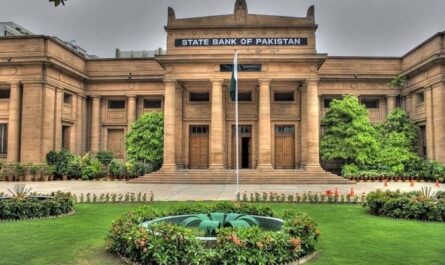
According to the State Bank of Pakistan, Saudi Arabia has agreed to roll over $5 billion in deposits and extend a $1 billion oil facility to Pakistan source official website
7. Pakistan–Saudi Arabia Relations
7.1 Historical Ties
Pakistan and Saudi Arabia share a history of cooperation spanning decades. Key areas include:
- Defence collaboration and joint military exercises.
- Energy and oil supply agreements.
- Trade and investment partnerships.
This longstanding relationship provides a strong foundation for financial support and strategic collaboration.
7.2 Recent Developments
Recent years have seen:
- Increased Saudi investment in Pakistan’s energy and infrastructure sectors.
- Strategic defense agreements and joint training programs.
- Stronger private sector cooperation and bilateral trade initiatives.
These developments reflect growing interdependence and mutual interest.
7.3 Investment, Energy, and Defence Cooperation
Saudi Arabia has shown interest in investing in renewable energy, oil refineries, and industrial zones in Pakistan. Defence collaboration has also intensified, ensuring stronger security ties.
The financial support announced in 2025 further cements this strategic partnership, providing Pakistan with immediate relief while enhancing long-term cooperation.
8. Implications for Pakistan’s Future
8.1 Economic Strategy and Reforms
The Saudi support offers Pakistan a window to implement medium-term economic reforms:
- Stabilizing external accounts.
- Reducing import reliance and promoting exports.
- Improving fiscal discipline and strengthening taxation systems.
If leveraged effectively, this period can strengthen Pakistan’s economic resilience and reduce dependency on external aid.
8.2 Energy Security and Diversification
While the oil facility addresses immediate energy needs, Pakistan must focus on long-term energy diversification:
- Expanding renewable energy projects.
- Enhancing domestic refining capacity.
- Reducing reliance on imported oil.
Strategic energy planning will be crucial to sustainable growth.
8.3 Regional Dynamics
Closer Saudi ties may shift regional geopolitical balances in South Asia. Pakistan can leverage this partnership to attract investment from other Gulf countries and strengthen its economic position in the region.
A stable economic outlook supported by Saudi assistance could also improve Pakistan’s bargaining position in international trade and diplomatic forums.
9. Key Takeaways
- $5 billion deposit rollover and $1 billion oil facility provide critical liquidity and energy relief.
- Short-term stabilization allows Pakistan to focus on reforms and fiscal management.
- Long-term economic independence requires structural reform, export growth, and energy diversification.
- Strengthened Saudi-Pakistan relations benefit both nations strategically and economically.
- Effective use of support can help Pakistan stabilize its economy, improve investor confidence, and plan for sustainable growth.
10. Conclusion
Saudi Arabia’s financial and oil support to Pakistan provides immediate relief in foreign exchange, liquidity, and energy security.
The $5 billion deposit rollover and $1 billion oil facility are key tools in stabilizing Pakistan’s economy amid global volatility and internal fiscal challenges.
However, this support is temporary. Pakistan’s long-term stability depends on structural reforms, fiscal discipline, energy diversification, and export growth.
If effectively managed, the Saudi support can serve as a bridge to sustainable economic stability, allowing Pakistan to reduce dependence on external assistance while strengthening its strategic position regionally and globally.